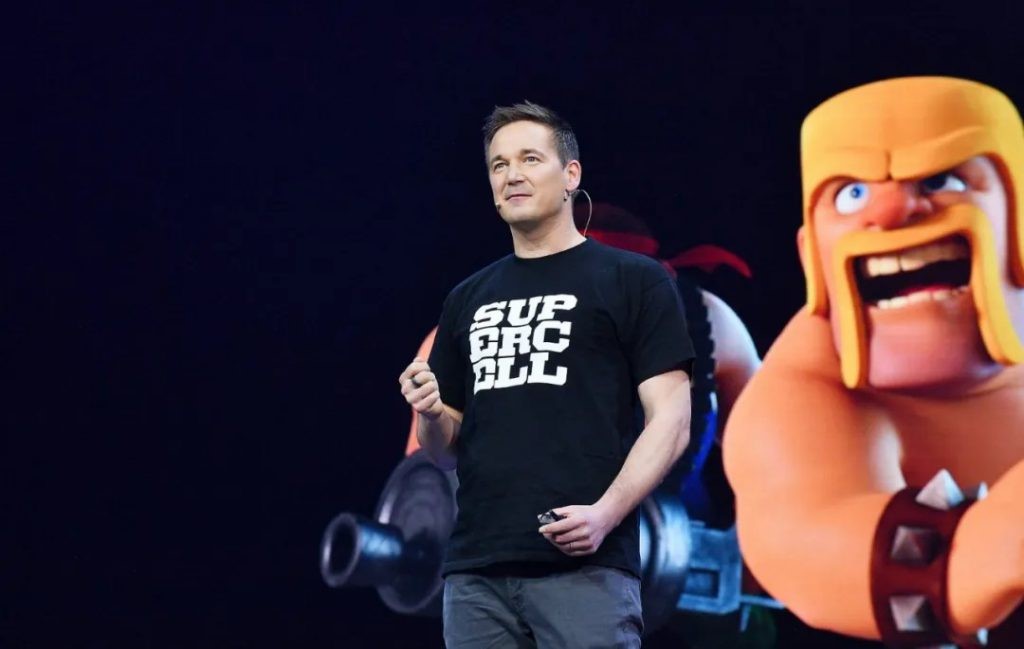
GameLook Reports/ It’s extremely rare for a mobile game company CEO to receive such a top honor in the Western gaming industry. The BAFTA Fellowship has traditionally been a platform reserved for veterans of major AAA game companies, with past recipients including Hideo Kojima, Shigeru Miyamoto, and Gabe Newell… This list represents the historical depth of the entire gaming industry. This time, Supercell CEO Ilkka Paananen has joined this ranks, becoming one of the very few recipients from the mobile game industry.
In GameLook’s view, this is not only a high recognition of his more than two decades of entrepreneurial experience, but also a signal: the mobile game industry has developed to a stage where it can influence the entire gaming market landscape.
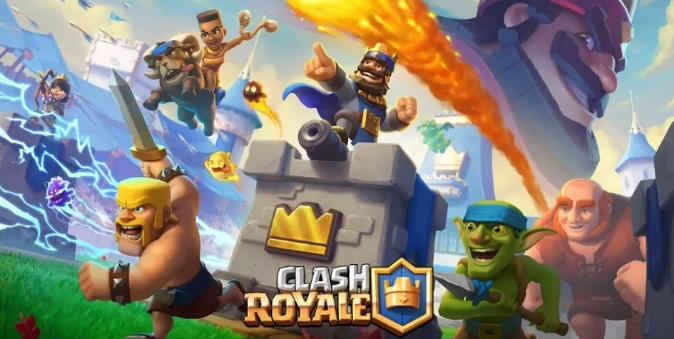
Supercell itself is a flagship company in the mobile game industry. Almost every hit game from Supercell has pioneered a new genre in the mobile game market or become one of the most representative successful games in the early days of the smartphone game market. From *Hay Day* to *Clash of Clans*, from *Clash Royale* to *Brawl Stars*, each game has a distinct cultural personality and stands out from the crowd. In a time when the entire industry is anxious about growth, these “evergreen games” have not only not withered in recent years, but have actually grown against the trend, with some even seeing two older titles taking turns driving company revenue growth year after year.
Recently, PocketGamer interviewed Supercell CEO Ilkka Paananen, who just received an award, to discuss his experience in the game industry and the core challenges facing the mobile game market.
The following is the full translation by Gamelook:
Ilkka Paananen has built an outstanding career in the game industry. He is best known as the CEO of Supercell, a company whose teams have created a number of global hits: *Clash of Clans*, *Hay Day*, *Boom Beach*, *Clash Royale*, and *Brawl Stars*.
Now, he has received the BAFTA Lifetime Achievement Award. This award recognizes an individual’s achievements throughout their career in the film and game arts.
He thus joins a stellar list of industry legends, including Hideo Kojima, Shuhei Yoshida, Siobhan Reddy, Gabe Newell, Yoko Shimomura, and Shigeru Miyamoto. Miyamoto’s work at Nintendo was a key inspiration for Supercell’s philosophy of “creating games that will be remembered forever.”
Paananen believes that success in the game industry requires three things: luck, a great team, and the best corporate culture.
“Many people achieve the first two, but unfortunately, they lack the luck to succeed,” he said in an interview. “I’m very grateful that we had the perfect combination of timing, location, and people.”

The Beginning of His Game Career
Paananen had always had a strong interest in games, but his career began by chance. During his studies, he was enrolled in a business program at Helsinki University of Technology. He said that at the time, the typical career paths for students were limited to two: investment banking or management consulting, working at firms like Goldman Sachs and McKinsey. But he always harbored a burning desire to start his own business.
One summer job, he happened to sit next to an engineer named Sami. Sami said that he and a few friends were planning to start a business together; they were all in the gaming industry and needed someone to handle everything from finance and administration to sales. They asked Paananen if he was interested in joining.
“I said, of course,” he recalled. “I was still a student then, about 21 years old.” He even offered to work for free. To give him a respectable title representing the company, he was given the position of CEO. That was his first company, Sumea, founded in 2000, specializing in mobile game development. At that time, the App Store and the iPhone were still far off, and the industry had not yet experienced that explosive growth.
“I remember walking out of that coffee shop and thinking: Wow, I’m actually the CEO of a company now. I’ve never really had a regular job in my life, only read business books and studied case studies in college.”
So, if that chance encounter hadn’t happened, would he still be in the gaming industry? Paananen says he might still be an entrepreneur, just perhaps in a completely different field. But he adds, “Once you get into the gaming industry, it’s hard to leave because it’s just so interesting.”
Career Trajectory
In 2004, Sumea was acquired by Digital Chocolate, a mobile game developer and publisher founded by EA founder Trip Hawkins. “I often refer to my experience at Digital Chocolate as my MBA in business and entrepreneurship.”
At the time of the acquisition, Sumea had grown to about 40 to 50 employees, while he recalls Digital Chocolate had only about 20. Paananen says he had a lot of autonomy there, eventually rising to become president.
But in 2010, Paananen left the company. After working there for 10 years, he felt he wanted to do something “fundamentally different,” but the company’s operating model prevented him from doing so. “They almost needed to completely reset the company.” After repeated discussions with the founders and recognizing the company’s established culture and history, he decided to leave.
In 2011, he founded Supercell, building a completely new corporate culture based on his years of experience in the game industry. The company’s “cellular” organizational structure is now widely known, empowering small teams to independently develop games. After the initial failure of the browser game *Gunshine* (a failure that later became a celebrated chapter in the company culture, with Supercell treating every subsequently canceled project with the same spirit), Supercell soared to success with mobile games *Hay Day* and *Clash of Clans*.
Since then, the company has created five billion-dollar blockbuster games, renowned for its extremely high success rate and lean teams over the years. These achievements have attracted billions of dollars in investment from SoftBank and Tencent.
Despite its once seemingly invincible success, and with its game portfolio still highly commercially valuable, achieving record revenue in 2024, that “magic touch” has begun to fade. Since *Brawl Stars* in 2018, the company hasn’t released any new blockbuster titles, and *Blast Squad*, launched in 2024, became the first game launched by the company to be shut down.
In response, Supercell restructured internally, splitting its teams into two: one responsible for new game development, and the other for the operation of existing games. The company also brought in new management, including President Sara Bach, and significantly expanded its staff, hiring 300 new employees in 2025 alone.
Amid these changes, player activity and revenue for *Clash Royale* and *Brawl Stars* have fluctuated dramatically. Meanwhile, the new game division, including the “Spark” program aimed at incubating new teams from internal and external developers, has yet to truly take off.
Given the company’s restructuring and the new challenges facing mature markets, are the founding principles upon which Supercell built its foundation still applicable?
“Absolutely,” he answered confidently, adding, “When we founded Supercell, we thought: Okay, whatever happens, this will absolutely not happen to Supercell.”
He explained that successful companies often end up marginalizing creative talent, pushed aside by an “external force, sometimes invisible, sometimes very obvious.”
So, will this culture of external business pressure dominating everything, which he worries about, really destroy games and the company?
“We get criticized all the time. Think about it, nearly 300 million people play our games every month… If you compare our revenue to our player base, you could easily say we could have done a better job of monetizing. Industry blogs, podcasts, everywhere you go criticize us like that. But perhaps that’s precisely why games like Hay Day and Clash of Clans have kept players engaged for over a decade; we don’t ‘burn through’ our players.
But then again, the temptation to over-commercialize and exhaust our players is just too great, because you need to meet your revenue targets for the next quarter. So I think that approach would absolutely ruin the game and the company.”
Supercell’s White Whale
Following criticism for not releasing a new blockbuster in over seven years, Supercell’s corporate culture is facing increasing scrutiny. When asked why the company is in this predicament, he said that releasing a new blockbuster is inherently difficult, and according to the company’s consistent approach, it’s either aiming for a billion dollars or not doing it at all, which is not easy for anyone.
In his annual blog post, the Supercell CEO pointed out that since 2020, 22 games have generated over $1 billion in revenue, 20 of which came from developers in China, Japan, and South Korea.
Paananen stated that the mobile gaming industry is now facing an even fiercer battle for fragmented playtime. At the same time, if the industry were to look in the mirror, he believes that no one has truly created anything “breathtakingly different.”
To drive the industry to the next level, “someone needs to come up with that game, and we are certainly trying our best to do our part.”
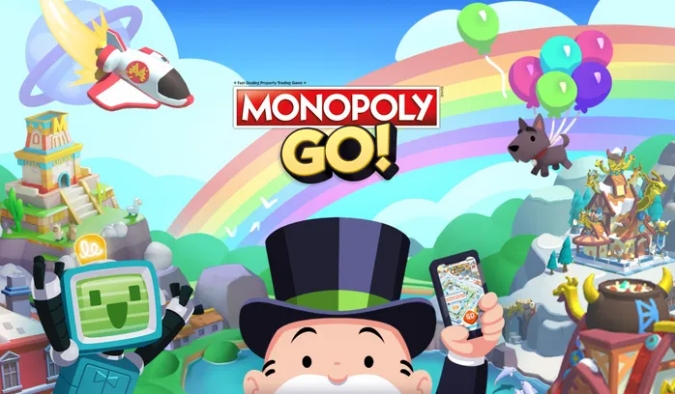
But what exactly does he mean by “innovation”? Is it a completely new experience, or a revolution in existing genres? Scopely made a big splash in the coin-collecting genre, creating the $6 billion blockbuster *Monopoly GO*; TapTap Interactive’s *Whiteout Survival* and FunFly’s *Last War: Survival* successfully blended casual gameplay with 4X strategy; and Dream Games ultimately wrested the throne of the match-3 genre from King’s *Candy Crush Saga* with its high-quality production.
Paananen said he was referring to a completely new experience that players had never seen before. “Pokémon Go is, in my opinion, the perfect example; everyone who plays that game is so proud. I think the whole industry needs that moment again.”
Looking to the Future
Paananen has been deeply involved in the gaming industry for over 25 years, almost entirely focused on the mobile sector. Interestingly, he also recalled another summer job experience: in 1999, just before founding Sumea, he worked as a junior analyst at a telecommunications company, tasked with writing a report on the Japanese mobile market, when feature phones were just entering Europe. It was from then on that he saw the potential of these devices to become computers and gaming terminals, although it would take many years for this to truly take off.
Having spent 25 years in the mobile gaming industry, and having personally criticized the industry’s lack of innovation, does he still have passion for it?
“You know, I’m more excited than ever. Sometimes people think I’m joking, but I’ve never been this excited. The reason is that this platform is so much better now than it was 10 years ago. Any smartphone these days is an amazing gaming device. The network is better, the infrastructure is there, and we have AI as a powerful tool that will open up entirely new possibilities, especially for small teams.”
He added, “Supercell’s founding philosophy—these small, independent, creative cells—will be given unprecedented superpowers by AI. So, yes, it’s definitely challenging and competitive, but I think that’s what makes it so exciting.”
Paananen still dreams of building a company like Nintendo, drawing inspiration from Nintendo’s 136-year history and the games and classic characters created by BAFTA Lifetime Achievement Award winner Shigeru Miyamoto and the company’s large and excellent development team.
He said Supercell is still very far from that goal. But he feels that as long as he can help the team get one step closer to this vision, he will stay with the company, which is now 15 years old.
Reflecting on his more than 25-year career in the gaming industry and receiving the BAFTA Lifetime Achievement Award, Paananen offered concise advice to the next generation of developers and those aspiring to start their own businesses: “Just start doing it. That’s my most important advice.”
About The Author