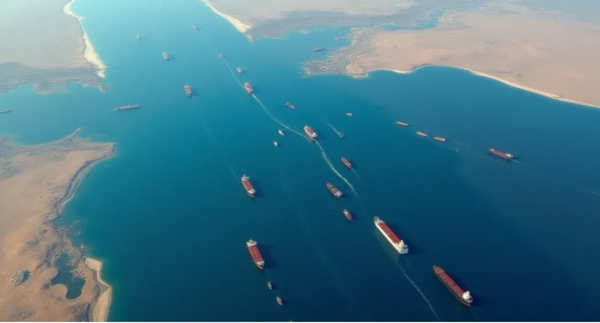
According to CNN, on April 8th local time, the Iranian Islamic Revolutionary Guard Corps (IRGC) issued a statement saying that shipping volume in the Strait of Hormuz plummeted and subsequently stalled after Israel violated the ceasefire agreement.
The IRGC stated that a ship scheduled to pass through the strait that evening changed course and turned back near the strait.
The report stated that maritime traffic tracking data showed no ships were currently passing through the Strait of Hormuz.
Previously, it was reported that traffic in the strait had begun to resume after the US and Iran announced a ceasefire on the evening of April 7th (Eastern Time) and began two weeks of negotiations.
In short, the US-Iran ceasefire had only been in effect for one day when Israel disrupted it, and Iran directly targeted the Strait of Hormuz. The whole situation is particularly ironic and realistic.
On the evening of April 7th (Eastern Time), the US and Iran announced a two-week ceasefire for negotiations. Shipping through the Strait of Hormuz had begun to slowly recover—after all, it’s a vital global oil chokepoint, with hundreds of ships passing through daily; a halt would be painful for everyone.
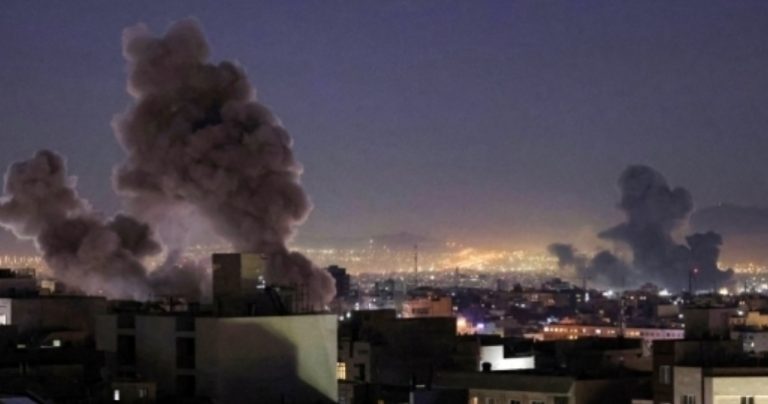
Israel’s bombing of the Strait immediately escalated tensions. As a result, on the 8th, Israel launched an attack on Lebanon, and Iran directly stated: “You violated the ceasefire agreement.” The Revolutionary Guard immediately issued a statement, and shipping through the Strait plummeted—to a complete standstill. Ships that were about to pass turned back. Traffic data also shows: no ships are currently crossing the Strait.
In my personal opinion, Iran’s stance has always been: “If you provoke me, I’ll block the Strait.” The US and Iran had just begun talks when Israel jumped in to cause trouble. Iran couldn’t possibly swallow its anger. Closing the Strait directly sends a message to the US and Israel, as well as to its domestic population and allies: “I mean what I say, I won’t suffer in silence.” A strait shutdown immediately strains global oil prices and supply chains; the West is even more afraid of a complete shipping disruption than Iran itself. This is Iran’s most effective and frequently used bargaining chip.
The US-Iran ceasefire was already strained. The US wanted an immediate, unconditional reopening of the Straits, while Iran demanded a controlled reopening, Iranian leadership, compensation, and the lifting of sanctions—a host of conditions. Furthermore, Israel wasn’t fully committed to the ceasefire—it had already stated that “the ceasefire does not include Lebanon.” Therefore, it’s no surprise that it broke down almost immediately. It simply means that in the Middle East, ceasefires are always “suspended,” not “ended.”
The worst hit are ship owners, seafarers, and global trade. Hundreds of ships (four or five hundred oil tankers alone) are stuck in the Persian Gulf and the Gulf of Oman. Shipping companies either have to round the Cape of Good Hope (adding 10-15 days and skyrocketing costs) or simply stop sailing altogether. Seafarers are stranded on board for months, lacking supplies and under immense psychological pressure. Ultimately, all these costs will be passed on to oil and commodity prices. In short, in the great power game, ordinary people and the global supply chain pay the price.
What will happen next? We can speculate: Iran won’t completely shut down, but will implement “limited opening and strict control”: applications and inspections will be required, and only a few ships will be allowed to pass each day.
The US will maintain a tough stance and threaten “serious consequences,” but a renewed war is unlikely in the short term. Negotiations (in Pakistan on the 10th) will likely remain deadlocked, with conflict escalating alongside negotiations. Israel is likely to continue its provocative actions in Lebanon and Syria, continuing its role as a “spoiler.”
About The Author