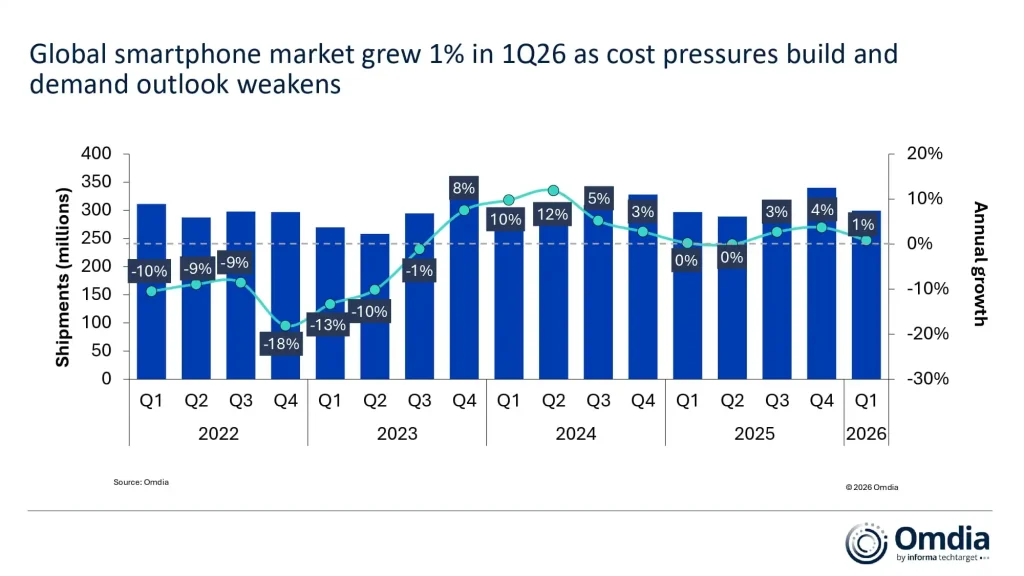
Market research firm Omdia released a blog post yesterday (April 10th) stating that the global smartphone market performed better than expected in Q1 2026, with shipments increasing by 1% year-over-year, primarily due to temporary support from front-loaded channel inventory.
The report points out that the Q1 2026 survey results do not fully reflect the impact of rising supply chain costs. Currently, mobile DRAM and NAND prices rose by approximately 90% quarter-over-quarter in Q1 and are expected to rise a further 30% in Q2, significantly pushing up bill of materials costs. Meanwhile, early signs of disruptions to logistics and trade flows are adding headwinds to the global supply chain.
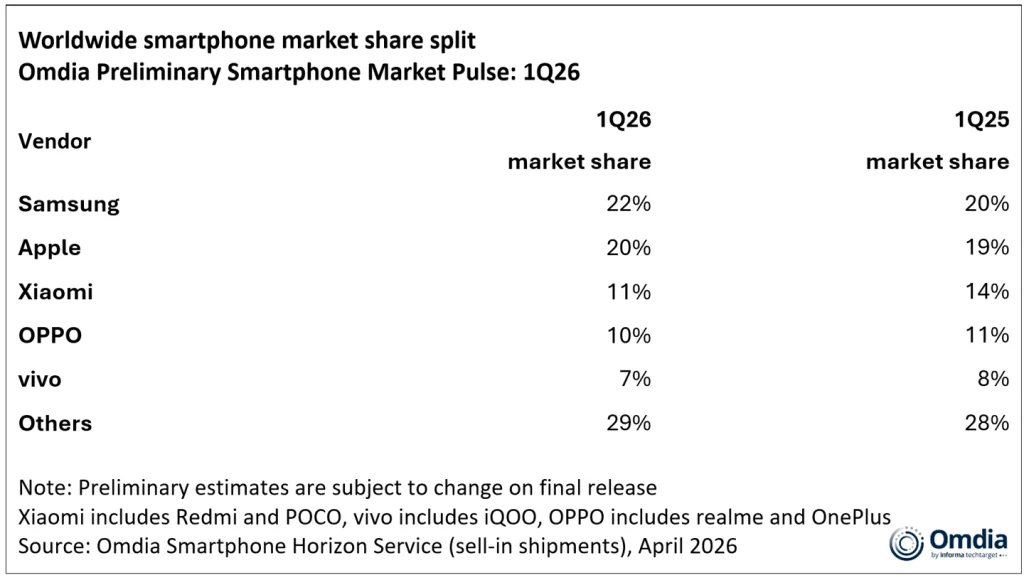
In terms of market competition, Samsung benefited from the resilient demand for its flagship models, with global pre-orders for the Galaxy S26 series increasing by more than 10% compared to the Galaxy S25 series. As a result, it regained the top spot in the market in the first quarter with a market share of 22%.
Apple also delivered strong quarterly results, achieving a 20% market share, thanks to its stable pricing strategy and robust demand for the iPhone 17 series.
Xiaomi held an 11% market share, OPPO 10%, and vivo 7%. We has attached the relevant charts below:
The report points out that most Android manufacturers face a dual challenge in terms of sales volume and profits, and are responding by streamlining their product portfolios, selectively releasing new products, and adopting more cautious pricing strategies.
Cost pressures are forcing manufacturers to adjust their pricing strategies. Omdia’s chief analyst, Sanyam Chaurasia, points out that manufacturers are forced to raise prices due to increasing cost pressures, but the impact is uneven. Manufacturers like Transsion, which focus on the entry-level and mid-range markets, face greater risks due to their thin profit margins and limited pricing power.
Looking ahead, the downside risks to the market are increasing. appreviewpros.com believes that in the short term, if prices continue to rise and demand is impacted, consumers will postpone purchases.
About The Author