On April 14th, Mercedes-Benz unveiled the 2027 EQS electric sedan. This is likely the last major update before the EQS becomes a collector’s item.
The new car features a comprehensive technological upgrade, with significant improvements in almost every core aspect, from the 800V architecture and longer range to steer-by-wire, enhanced energy recovery, and a smart cockpit. However, it retains the controversial “teardrop” shaped exterior. Mercedes-Benz will later launch a pure electric S-Class to carry on the EQS’s technological mission, but with a more traditional design style.
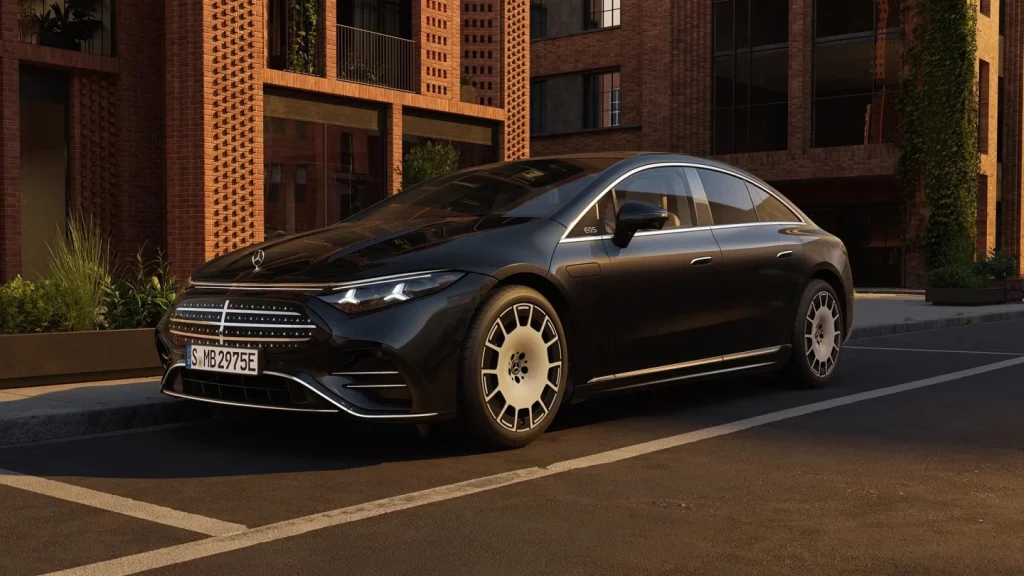
The 2027 EQS is planned for a US launch in the second half of 2026. Mercedes-Benz claims that over a quarter of the vehicle’s components are “new, updated, or optimized,” with the most significant change being the upgrade of the electrical architecture from 400V to 800V, enabling DC fast charging up to 350 kW. When connected to an 800V charging station, the EQS can replenish approximately 320 kilometers of WLTP range in just 10 minutes.
Furthermore, its battery has been upgraded from 118 kWh to 122 kWh, and the anode material utilizes a new chemistry of silicon oxide and graphite, while reducing the use of cobalt. The single-motor rear-wheel-drive EQS 450+ boasts a WLTP combined range of 925 kilometers, an improvement of 109 kilometers compared to the current model. Mercedes-Benz states that all versions of the EQS will see significant improvements in range.
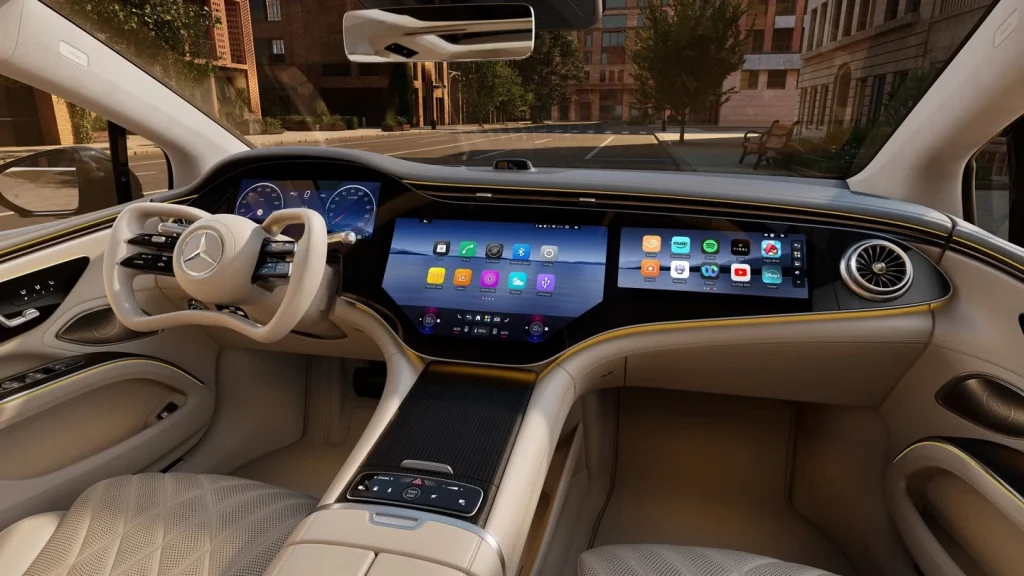
Another noteworthy new technology is the steer-by-wire system, marking the first time Mercedes-Benz has introduced this feature in a production vehicle. Customers can opt for a near-rectangular yoke steering wheel (which Mercedes-Benz calls a “steering rudder,” with a rotation angle of only about 270 degrees, less than a full rotation). The vehicle’s computer determines the distribution of steering angle between the front and rear wheels based on speed and driving mode: more responsive steering input at low speeds and a reduced steering ratio for improved stability at high speeds.
With the optional steer-by-wire system, the maximum rear wheel steering angle increases from 4.5 degrees to 10 degrees, further enhancing maneuverability in tight spaces. Of course, Mercedes-Benz also offers the standard configuration if customers prefer a traditional round steering wheel and electromechanical steering.
Regarding energy recovery, the 2027 EQS increases regenerative braking power by one-third, reaching 385 kilowatts. For reference, the newly released all-electric GLC has a maximum regenerative braking power of 300 kilowatts, and Mercedes-Benz claims that the electric motor undertakes 99% of the braking task. It is expected that the new EQS will also have an extremely low frequency of friction braking intervention.
In terms of intelligent features, the new car is equipped with Mercedes-Benz’s latest MB.OS system and its signature 56-inch triple-screen display, introducing a multi-agent AI assistant and deep integration with Google Maps.
The “zero-level” interface uses AI to learn the user’s most frequently used functions and displays them directly on the main screen as widgets, reducing the cumbersome operation of multi-layered menus.
Meanwhile, its driver assistance systems have been enhanced, with a total of 10 cameras and 27 sensors throughout the vehicle, supporting automatic lane changing, evasive steering, and automatic parking. However, it’s worth noting that Mercedes-Benz has not offered the Level 2++ “Drive Pilot Assist” system, which will debut in the CLA electric sedan, on this model—the latter allows for hands-free driving in urban areas, but still requires driver vigilance.
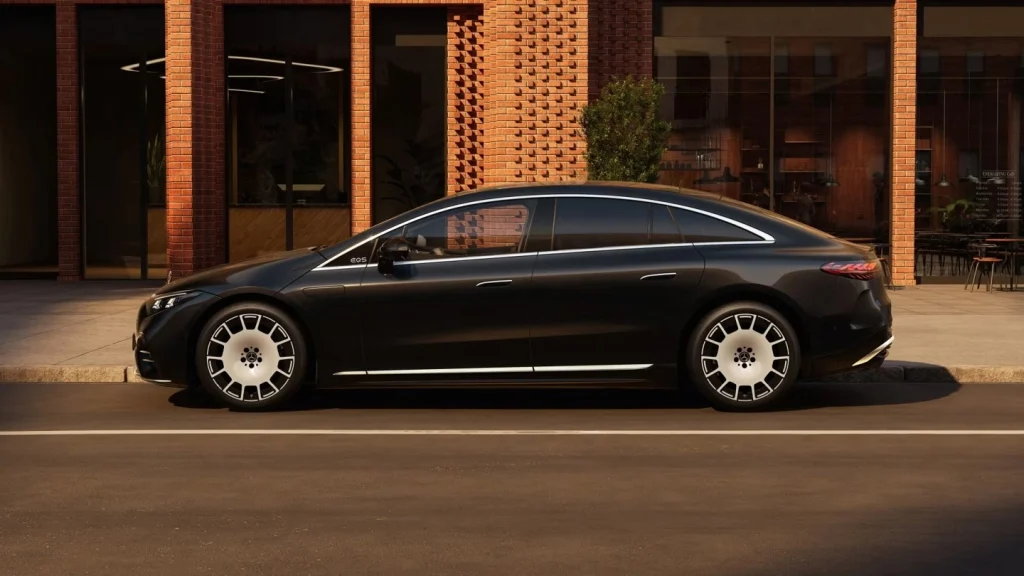
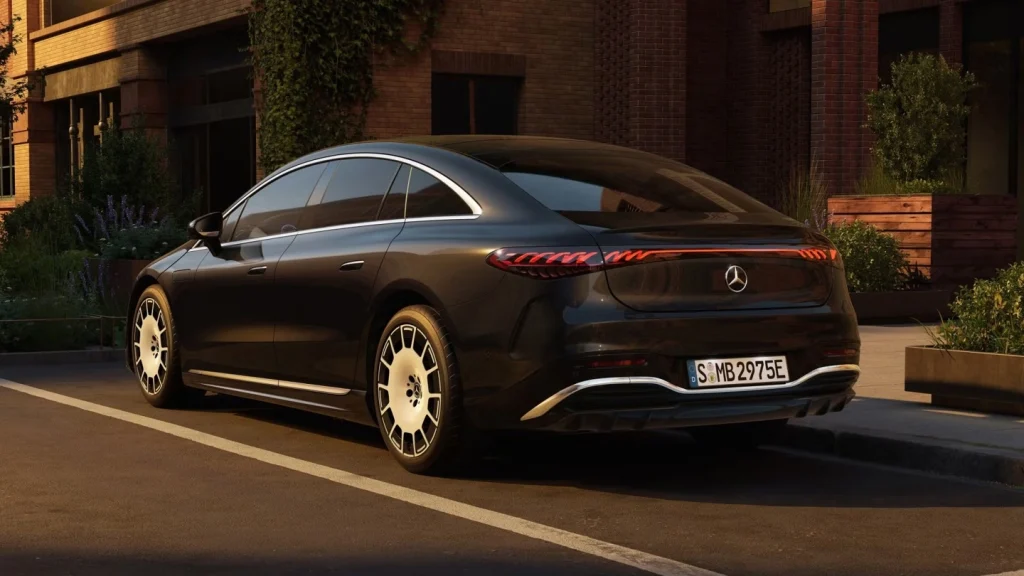
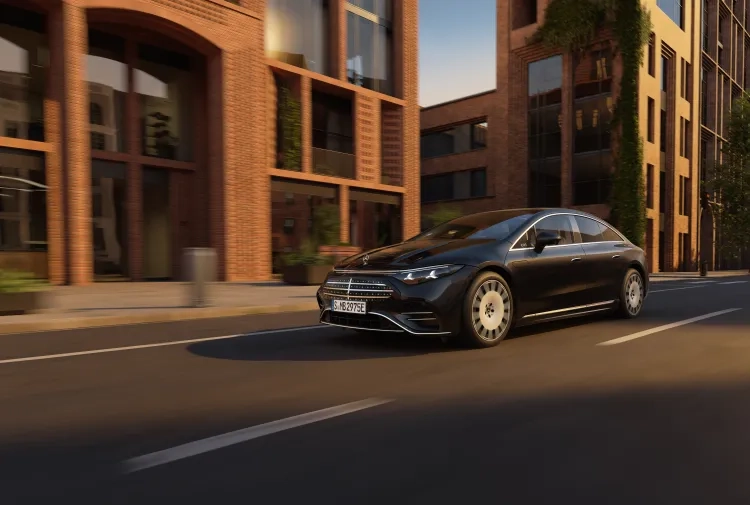
In terms of appearance, the 2027 EQS retains the controversial “teardrop” single-arch silhouette, boasting an industry-leading drag coefficient of 0.20Cd.
However, its front end has been slightly modified: while retaining the slender, sharp headlights and the continuous LED light strip, the headlights now feature a more intricate three-pointed star emblem. The “fake grille” panel between the headlights adopts a design style similar to the CLA and GLB, a change some foreign media outlets believe actually lowers the vehicle’s perceived quality, and unlike the gasoline-powered models, it doesn’t use a high-gloss black trim around the fake grille.
Other exterior adjustments include new wheel designs and subtle refinements. The taillights have also been subtly tweaked, employing spiral LED elements to emphasize visual width and luxury. Furthermore, Mercedes-Benz has brought the seatbelt heating function down from the S-Class, claiming it not only provides comfort in cold weather but also encourages passengers to remove heavy coats, allowing the seatbelts and safety systems to perform better in the event of an accident.
For users seeking personalization, Mercedes-Benz offers the “Manufaktur Made to Measure” customization program, providing over 100 paint colors and numerous exclusive interior options, attempting to move the EQS from a “mass-produced” feel to a “tailor-made” experience.
Mercedes-Benz has not yet announced the specific price of the 2027 EQS. It is currently known that several versions will be available: the EQS 450+ is a single-motor rear-wheel-drive model with the longest range; the EQS 500 4MATIC and EQS 580 4MATIC are both dual-motor all-wheel-drive models, equipped with an integrated decoupling unit on the front axle. This allows for quick disconnection of the front motor when not needed to save energy, while “lightning-fast” reconnection when traction or rapid acceleration is required. Furthermore, thanks to dual-axle energy recovery, these two versions offer the highest regenerative braking power.
About The Author