
On April 18th local time, a serious accident occurred during qualifying for the Nürburgring 24 Hours endurance race in Germany.
Just 25 minutes into the race, a seven-car pileup occurred on the track, tragically killing 66-year-old Finnish driver Juha Miettinen. The qualifying session was subsequently cancelled.
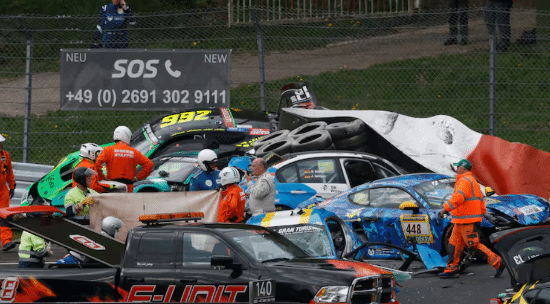
According to multiple media reports, the accident was suspected to have been caused by an oil leak on the track. A race car experienced a liquid leak on the high-speed section, causing several other cars behind it to lose control and resulting in a chain reaction collision, involving a total of seven cars.
Miettinin, driving a BMW 325i, was severely damaged in the collision. He was pulled from the car but died despite resuscitation efforts.

It is understood that Miettinen was a veteran amateur racing driver who was active in the Nürburgring Endurance Series for many years. Following the accident, the race organizers, ADAC, issued a statement expressing their deepest condolences for Miettinen’s passing and extending their sympathies to his family.
This qualifying session was originally a qualifying battle for the Nürburgring 24 Hours endurance race. Four-time F1 world champion Max Verstappen was also registered, making this year’s race highly anticipated. Verstappen won the Nürburgring 4 Hours in March, but was disqualified afterward due to a tire violation by his team. He was scheduled to make his Nürburgring Nordschleife debut in the main race in May.
After the accident, Verstappen expressed his condolences for the deceased driver on social media. Many other participating drivers also spoke out, calling on the race organizers to further strengthen safety measures.
The Nürburgring Nordschleife, over 20 kilometers long with more than 170 corners, is known as the “Green Hell” and is one of the most dangerous and challenging circuits in the world.
Although the organizers have continuously invested in track safety facilities in recent years, including adding guardrails, buffer zones and safety warning systems, it is still difficult to completely avoid emergencies at high speeds.
About The Author